Helping Shape OpenAI's Products Before Launch
Inside my work with OpenAI's first ChatGPT Lab: testing products before release, pressure-testing student use cases, contributing to launch campaigns, and turning 100 real workflows into a published book.
Project Snapshot
- Project type: PROJECT
- Year: 2025–Present
- Primary topics: PROJECT, Isaac Seiler project
- Search focus: Inside my work with OpenAI's first ChatGPT Lab: testing products before release, pressure-testing student use cases, contributing to launch campaigns, and turning 100 real workflows into a published book.
A seat close to the product
In spring 2025, I joined the first cohort of OpenAI's ChatGPT Lab. I came in as a student, researcher, and very heavy ChatGPT user—not as an engineer. My job was to notice what felt useful, what broke down, and what would make a new product make sense to people like me.
The work moved between product diaries, feedback sessions, launch campaigns, and public stories. I also had the chance to work with Hillary Bush and other OpenAI leaders, bringing a student and early-career perspective into product and go-to-market conversations.
What follows is the product-by-product version: what I tested, what I pushed on, and what eventually made it into the world.
100 Chats: turning behavior into a book
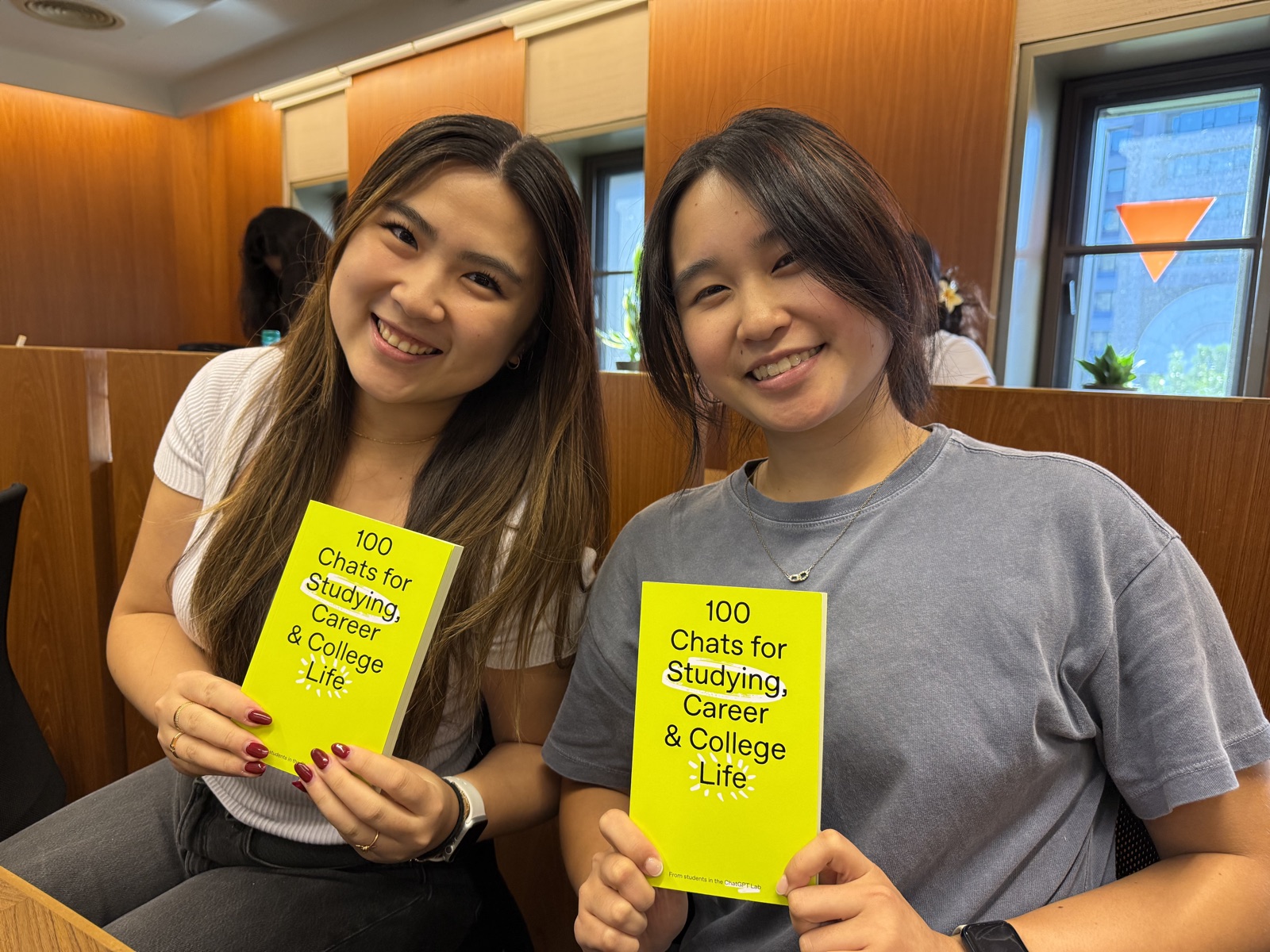
The first big project asked a deceptively simple question: what are college students actually using ChatGPT for? Together, the Lab built a collection of 100 real workflows—less a prompt library than a snapshot of how students were learning, creating, researching, and getting unstuck.
My contributions came from the places I was already using ChatGPT: research, writing, policy, and the small technical problems that can derail a day. I helped turn those examples into a public book and story that other students could recognize themselves in.
- Explaining a complex news-media bargaining policy from ten different angles.
- Generating stronger academic titles and a clean first-pass abstract.
- Making sense of a statistical correlation in my electric-vehicle research.
- Turning an opaque error message into a practical next step.
Study Mode: making ChatGPT teach, not answer
Study Mode was the clearest test of a tension I had felt as both a student and teaching assistant: an answer can be correct and still short-circuit the learning.
I used the early experience to think through graduate school and a five-year career plan. I liked that it made me supply the substance instead of pretending the model knew what I wanted. My biggest push was about the ending: good Socratic questions still need to help a user land the plane.
When Study Mode launched, OpenAI highlighted my use case in its student storytelling. It was satisfying to see a product move toward the kind of critical engagement I had wanted from it in testing.
Back to School: translating a product into campus life
The Back-to-School work was separate from Study Mode. This was not about changing how the product reasoned; it was about making the broader campaign feel like it understood what students were actually trying to do.
I reviewed campaign concepts and prompt cards, pushed for more career and professional-development examples, and contributed a real prompt about finding a policy internship in Washington, D.C. I also gave feedback on how physical campus activations could feel participatory instead of promotional.
That distinction mattered to me. A strong education product and a strong student campaign solve different problems, even when they launch in the same season.
Pulse: when ChatGPT starts the conversation
Pulse flipped the usual interaction: instead of opening ChatGPT with a question, I woke up to personalized research waiting for me. Over several days, I tested how that felt in ordinary life—news, career planning, creative work, travel, and the logistics of moving to Taiwan.
The moments of real personalization felt like magic. My feedback focused on making those moments easier to find and trust: a more visible home for Pulse, compact cards, clearer sources, better preference controls, and fewer canned acknowledgements.
OpenAI's launch story featured my experience using calendar context to catch an unused day of PTO and turn it into a plan. That small example captured the promise for me: proactive AI should help me act, not just give me more to scroll.
Atlas: rethinking the browser
For OpenAI's browser work, I tested a basic premise: what changes when the assistant understands the page you are already on? I used early builds for travel research, translating Mandarin-language pages, comparing options, and turning scattered findings into an itinerary or map.
I kept coming back to the seam between browsing and chatting. I wanted fewer moments where the two felt like separate products, more control over the model doing the work, and recommendations that looked useful rather than ad-like.
The most convincing experiences were not grand. They were the minutes saved moving between a page, a question, and a decision.
Group Chats: learning when AI should speak
The early messaging concept started with a question I could not immediately answer: why would I direct-message someone inside ChatGPT? The more interesting version emerged when several people and the assistant shared one room.
I tested the experience as a group facilitator and pushed on the assistant's social judgment. It often participated too little or sounded too canned. I wanted people to be able to tune how active it was—to make ChatGPT a useful collaborator without letting it take over the conversation.
That work reinforced something I saw across every product: intelligence is only part of the design problem. Timing, restraint, and a clear role matter just as much.
What I learned from the Lab
Before the Lab, I thought product feedback mostly meant finding bugs or asking for features. I learned that the more valuable work is often translation: connecting what a team built to the messy way a person is actually trying to learn, plan, or make a decision.
The products were different, but my questions stayed consistent. Does this make the user more capable? Is the source of the answer visible? Does the interface help someone understand what to do next? And does the launch story match the real experience?
That is the work I want to keep doing—somewhere between the people building the technology and the people deciding whether it belongs in their lives.
Related Isaac Seiler Sections